
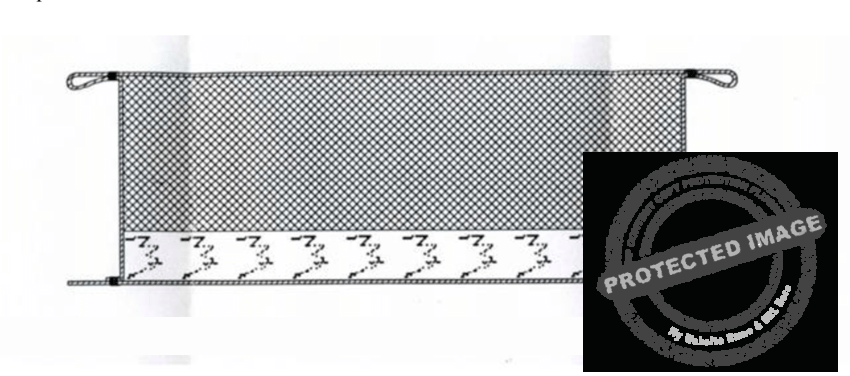

ELECTRIC FISHING SEINE
319.99$ – 924.99$Price range: 319.99$ through 924.99$
Electric Fishing Seine – Scientific Equipment for Electrofishing
General Description of the Electric Fishing Seine
In fact, professional biologists, researchers, and governmental organizations use our electric fishing seines. In addition, these specialized scientific tools are designed for conducting fisheries studies. For example, biologists mainly use them in rivers to count, sample, measure, weigh, and tag fish. As a result, the fish are released alive back into their natural habitat.
⚠️ However, authorities strictly regulate electrofishing and prohibit its use for commercial purposes. Therefore, it is only permitted within a scientific framework and in compliance with governmental standards.
Use and Principle of Electrofishing
For example, biologists use electrofishing in rivers to temporarily attract and immobilize fish. In fact, this method allows precise and efficient collection. Moreover, electrofishing ensures minimal stress and maximum capture accuracy for scientific studies.
Advantages of Using an Electric Seine
In fact, fish remain alive during the process. In addition, biologists retrieve them quickly. Moreover, the fish are re-oxygenated before release. Therefore, they are returned safely to their natural habitat. In fact, this method guarantees accurate sampling, minimal environmental impact, and high efficiency for biological surveys.
Technical Design of the Seine
In addition, the electric fishing seine is specially designed for river use. For example, a solid lower protective panel allows the addition of ballast. Moreover, the net stays in close contact with the riverbed. In fact, fine nylon or polypropylene mesh (Delta curtain type) ensures effective capture. In addition, the lower rope (ralingue) is weighted. Therefore, seams are reinforced with industrial stitching. As a result, fish cannot escape under the net, improving capture efficiency.
Technical Recommendations for Electrofishing
Because minimizing stress and injury to fish is essential, first, sampling should begin at low direct current voltage. Next, increase the voltage gradually until effective capture is achieved. Moreover, do not exceed 1.5–2 A depending on water conductivity. In addition, fish must not contact the anode (≈50 cm injury zone). Next, sweep the water with the electrode in a chevron pattern. Moreover, sample from downstream to upstream. Therefore, do not remain stationary in one area for too long. Finally, inspect nets frequently. In addition, stop operations if stress, injury, or abnormal recovery occurs.
Portable Wading Electrofishing
For example, portable wading electrofishing is recommended when the watercourse is narrow. Next, the depth is shallow. Moreover, the bottom is clearly visible. Finally, the substrate is heterogeneous, including gravel, rocks, or boulders. In fact, this method is especially effective for capturing species buried in the substrate, such as sand darters. ⚠️ In addition, formal training is strongly recommended due to the risk of electric shock.
Minimum Team Composition
In fact, an electrofishing team should include one operator of the device. Next, one or two net handlers are required. Finally, one person must oversee specimen collection, preservation, and habitat characterization. However, for watercourses wider than 7 meters, two teams are recommended.
Custom-Made Seines
Finally, we manufacture electric fishing seines to meet the specific needs of biologists, researchers, and scientific organizations. For example, choose the mesh type and size (1/8″ to 1/4″, sometimes 1/2″). Next, select the type of rope (ralingue) and ballast. In addition, configure the seine according to your scientific protocol. If, however, you cannot find the right seine, contact us. Therefore, we will manufacture it exactly according to your specifications.